
Stuart Clout
CEO / Co-founder
Founded thedocyard / Ansarada (B2B SaaS), took it public on the ASX, and exited to CapVest in 2024. Before that, a capital-markets attorney at top-tier UK and Australian firms.
Mulga builds Spinifex, an open-source, AWS-compatible cloud you run on infrastructure you control. Built for defence, taken to enterprise and AI. Founded across Australia and the US: company HQ in Austin, Texas; engineering HQ on Sunshine Coast, Australia.
"We've already invested years in cloud-native tooling. Why does running it on our own hardware have to mean throwing all of that away?" Defence and industrial operators kept asking us that. Mulga is the answer we owed them.
For a decade the pendulum swung all the way to the hyperscalers. It is swinging back. Cost, jurisdiction, latency and plain operational control are each pulling workloads off the public cloud, and organisations are repatriating the systems they cannot afford to lose: to the edge, to on-premise racks, or into a hot standby they own outright.
The cloud is not going away. The same mission-critical workload will increasingly run in more than one place at once: a hyperscaler region, an edge site, and a rack you own. What that needs is not another closed cloud with a new landlord, but an open AWS-compatible surface that runs wherever you put it and belongs to whoever runs it. The infrastructure you depend on should never depend on a vendor for its right to exist.
Anyone can wrap an API. Few can rebuild the storage, the block layer and the compute fabric underneath cleanly enough that workloads written for AWS just work. Predastore spreads S3 objects across nodes as Reed–Solomon shards. Underneath EBS, Viperblock runs a write-ahead log behind an NVMe cache. Ask for an EC2 instance and you get a real KVM guest, with PCIe passed straight through to the accelerators. All of that took far longer than wrapping an API would have, and it is the only reason your AMIs boot unmodified.
Defence came first, because that is where the constraint is absolute: the link home goes down and the mission still has to run. Enterprise repatriation teams turned up next with the same requirement under a different name. Then the AI companies, staring at a GPU bill they could no longer justify. One platform kept answering all three, which is how a defence product became an infrastructure company.
The names come from home. Mulga is the king brown, one of the most formidable snakes in Australia. It borrows its name from the Aboriginal word for the acacia scrub of the arid centre, the country it hunts and shelters in. Spinifex grows out there too, a grass tough enough to hold the dunes together through drought and fire. Neither survives by being delicate, which is roughly the brief we gave the software.
A cloud infrastructure business serving ISPs and telcos, acquired in 2024. Alongside it, a B2B SaaS platform taken from bootstrapped through an ASX listing to a private-equity exit. Five years inside AWS taught one of us the other side of the bill you are paying now.
Founded thedocyard / Ansarada (B2B SaaS), took it public on the ASX, and exited to CapVest in 2024. Before that, a capital-markets attorney at top-tier UK and Australian firms.
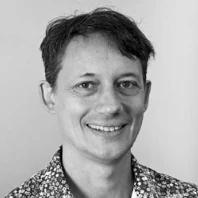
Founded Atmail, cloud email infrastructure for ISPs and telcos, through to trade sale in 2024. Five years at AWS as a Principal Solutions Architect to AWS startups.
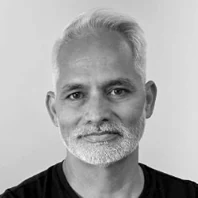
Twenty years in business development and management. Leads Mulga's US market development, and our defense and national security opportunities.

Most recently CTO of Cisco's Global Service Provider business, after three decades in digital infrastructure. He has sat on the vendor side of the service provider deals Spinifex now has to win.

Founded NuSpeed, which pioneered iSCSI and sold to Cisco, then Storspeed, acquired by NetApp. As GM of AWS Storage Gateway he solved hybrid storage at the scale we build for.
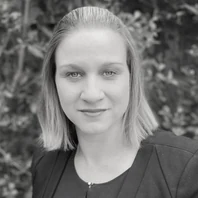
A logistics officer in the Royal Australian Navy for twenty years, now a Senior Director at LeoLabs. Sustaining hardware in places it cannot easily be reached is her actual expertise.

Thirty years on the layer under other people's work, from a national ISP to Cisco's network APIs. Now Architecture and Research at OutSystems. He sees where an interface will break before anyone is using it.
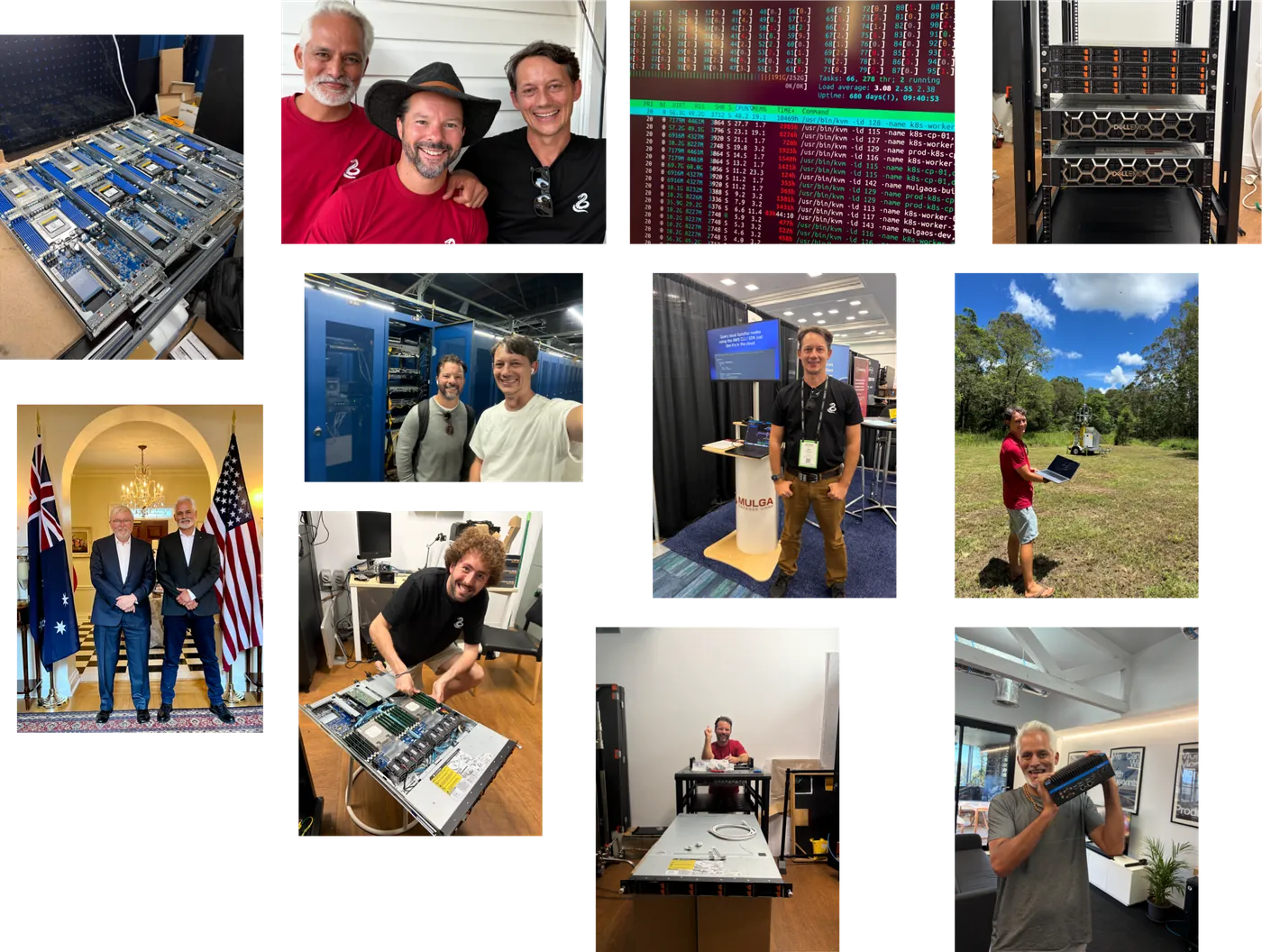
We're a distributed team building operator-grade infrastructure software in the open. If you've shipped serious distributed systems, built cloud control planes, or done deep work in storage, networking, or virtualisation, we want to talk to you.
Specific roles coming soon. For now we're hiring senior engineers across the stack.
Two offices: Austin, Texas (company HQ) and Sunshine Coast, Australia (engineering HQ), plus remote collaborators in between. Weekly cadence, strong written culture.
Neoclouds, OEMs, defence integrators, ISVs running on AWS who need their product to land off-cloud, say hi.
If you've got an AWS workload that needs to leave AWS or go to the edge, we'd like to know what you're trying to do.